
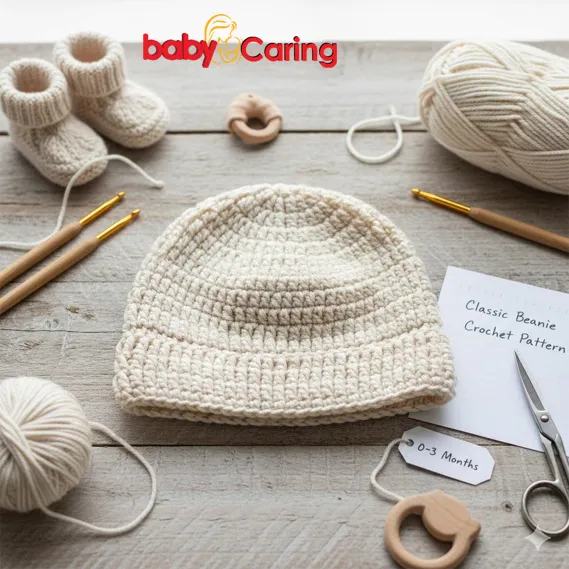
The first tiny hat your baby wears often becomes a treasured keepsake. A Baby Hat does more than look cute. It helps protect your newborn’s delicate head, supports temperature regulation, and can soothe sensitive skin when made with the right materials.
As a new mom, you want patterns that are:
- Gentle on baby’s skin
- Easy to make, even when you feel tired
- Practical for real-life messes and laundry
- Cute enough for photos and special memories 📸
In this guide, you’ll find 7 crochet baby hat ideas that balance beauty, practicality, and health. You’ll also learn how to choose safe yarns, pick the right size, and avoid common mistakes that can lead to overheating or irritation.
Before the patterns, keep one key health idea in mind: babies lose heat quickly through their heads. A well-fitting hat can help keep your baby comfortable, but an overly warm or tight hat can cause overheating. The goal is balance, not “as warm as possible.”
1. Soft and Stretchy Newborn Baby Hat (0–3 Months)
Nothing feels more special than your baby’s first days at home. A soft, stretchy newborn baby hat can help them feel snug and cozy, much like the womb.
This style is a simple beanie with gentle ribbing. It adapts as your baby grows during those early weeks.
Key features:
- Ideal for hospital bags and first photos
- Stretches without squeezing the head
- Works well with most outfits
Health benefits of this crochet baby hat
For the first weeks, babies struggle to control body temperature. A lightweight, snug beanie helps:
- Reduce heat loss through the scalp
- Protect the fontanelle (soft spot) from drafts
- Provide gentle pressure, which some babies find calming
Use breathable fibers like organic cotton or bamboo for this age. Avoid heavy, fuzzy yarns that trap too much heat or shed fibers.
Real-life example: One mom keeps two versions of this hat near the changing table. A cotton version for daytime, and a slightly warmer blend for chilly evenings. 🌙
Quick pattern overview
- Skill level: Confident beginner
- Yarn: Light worsted (size 3 or 4) in cotton or bamboo blend
- Hook: Usually 4 mm (G) or 4.5 mm (7), check gauge
- Shape: Simple crown decreases, then gentle ribbed brim
For detailed measurements, the Craft Yarn Council’s head chart is helpful when planning a newborn baby hat.
2. Textured Beanie Crochet Baby Hat (For Everyday Wear)
Once your baby is a bit older, a textured crochet baby hat adds style and function. Gentle texture holds warmth without needing very thick yarn.
This hat often uses simple stitches like half double crochet and front post stitches. The texture also helps the hat stay in place on slippery baby hair.
Why this pattern supports baby comfort
Even everyday hats should respect infant health:
- Texture creates small air pockets, improving insulation
- Medium weight fiber prevents overheating during naps in a pram
- A smooth interior keeps baby’s scalp comfortable
Choose a yarn labeled hypoallergenic and wash it before use. This helps remove any finishing chemicals and softens the fibers.
Quick pattern overview
- Skill level: Advanced beginner
- Yarn: Soft acrylic or bamboo blend, DK or light worsted
- Hook: About 4 mm (G)
- Design: Simple beanie with one or two textured stitch rows
Real-life example: A parent keeps two textured hats by the door. One stays in the stroller basket, the other in the diaper bag, so they are never without a clean backup.
3. Free Crochet Baby Hat Pattern 0–3 Months (Top-Knot Style)
Top-knot baby hats have a sweet, modern look. They also offer a practical benefit: a little knot or tie at the top helps adjust the length slightly as baby grows.
If you search for a free crochet baby hat pattern 0-3 months, you’ll see many top-knot styles. They are popular for baby showers and newborn photo sessions. 🎀
Health considerations with top-knot hats
Top-knot hats can be very safe if you:
- Keep the knot small and secure
- Avoid long strings or ties that dangle
- Check that the knot is soft and not heavy
You do not want any part of the hat to swing into the baby’s face. Avoid beads or heavy decorative elements at the top.
Quick pattern overview
- Skill level: Beginner
- Yarn: Soft cotton or cotton blend, DK weight
- Hook: 3.5–4 mm
- Design: Tube shape with cinched or tied top
Real-life example: One dad makes several of these in neutral colors. He rotates them during the week so there is always a clean, dry option ready.
4. Lightweight Lacy Baby Hat for Warm Weather
Warm climates call for a different approach. In hot weather, your focus shifts from “keeping baby warm” to “protecting baby from sun while preventing overheating.”
A lacy crochet baby hat works well for:
- Walks on mild sunny days
- Spring and summer photo shoots
- Air-conditioned spaces that feel a bit cool
Health benefits in warm climates
Lacy hats provide:
- Light shade for scalp and soft spot
- Airflow through the open stitches
- Less sweating under the hat
Keep these tips in mind:
- Choose light-colored yarn to reflect heat
- Never rely on a hat alone for sun safety
- Avoid heavy yarns in warm seasons
You can pair a lacy hat with baby-safe sunscreen on exposed skin after 6 months, following pediatric guidance. For younger infants, rely more on shade and physical barriers.
Quick pattern overview
- Skill level: Confident beginner to intermediate
- Yarn: Fingering or sport weight cotton
- Hook: 3–3.5 mm
- Design: Circular crown, shells or openwork body, soft brim
Real-life example: A mom uses a lacy hat only during outdoor strolls. She removes it as soon as they return indoors to prevent overheating. ☀️
5. Earflap Crochet Baby Hat for Chilly Days
When the weather turns cold and windy, the ears need extra protection. An earflap crochet baby hat covers ears and part of the cheeks, helping prevent windburn.
This style usually includes two flaps and optional short ties. It is great for stroller walks or quick trips outside.
Health and safety tips for earflap hats
- Make ties short and secure if you include them
- Never tie them tightly under the chin
- Remove the hat indoors and during sleep
Babies should sleep without hats, according to pediatric guidance on safe sleep. Overheating during sleep increases risk, so always take hats off before naps in cribs or bassinets.
Quick pattern overview
- Skill level: Intermediate
- Yarn: Soft wool blend or acrylic for warmth and easy washing
- Hook: 4–5 mm, depending on yarn weight
- Design: Beanie body with two shaped earflaps, optional edging
Real-life example: One parent keeps this hat for stroller walks on windy days. They tuck it into the stroller pocket when they go indoors to avoid overheating in stores.
6. “Outdoor Adventure” Style Hat (Patagonia Baby Hat Inspired)
Many parents love the sporty look of the classic patagonia baby hat. You can create a similar style with stripes, ear coverage, and a cozy fit.
While you cannot copy trademarked designs exactly, you can design a simple striped hat with:
- A snug fit around the forehead
- Ear coverage
- Soft, warm fiber for cold days
Health-focused features of an outdoor hat
This style is perfect for cooler outdoor activities, like:
- Babywearing on walks
- Quick trips in and out of the car
- Visits to colder climates
Health considerations:
- Use breathable wool blends or quality acrylics
- Avoid very bulky yarn that causes sweating
- Check for red marks on the skin after wearing
If you notice deep marks or fussiness, the hat may be too tight or too warm. Adjust your pattern or size.
Quick pattern overview
- Skill level: Intermediate
- Yarn: DK or worsted merino blend or soft acrylic
- Hook: 4–5 mm
- Design: Beanie shape with colorwork stripes and optional earflaps
Real-life example: Parents who hike often keep a designated “adventure hat” in their carrier backpack. They use it only outdoors and wash it frequently to remove sweat and dust. 🏔️
7. Animal-Themed Newborn Baby Hat for Special Moments
Animal ears on a tiny hat are almost irresistible. A newborn baby hat with bear, bunny, or kitten ears can make milestone photos unforgettable.
These hats are best used for short periods, not all-day wear. Their main role is emotional and social, not daily temperature control.
Health and safety reminders for novelty hats
- Keep ears small and light
- Secure all parts firmly
- Avoid buttons, beads, or glued decorations
Babies explore with their hands and mouths. Every part of the hat should be stitched securely to prevent choking hazards.
Quick pattern overview
- Skill level: Advanced beginner to intermediate
- Yarn: Soft acrylic or cotton blend, depending on season
- Hook: 4 mm
- Design: Simple beanie plus shaped ears, sewn on later
Real-life example: A family uses an animal hat only during supervised playtime and photo sessions. Once the photos are done, they switch back to a simpler, lighter hat.
Choosing the Right Baby Hat Size and Fiber
Before you start any baby hat crochet pattern, sizing and fiber choices matter for health and comfort.
Size guidelines
Every baby is unique, but common guidelines help:
- Newborn: 13–14 inches (33–35.5 cm) head circumference
- 0–3 months: 14–15 inches (35.5–38 cm)
- 3–6 months: 15–17 inches (38–43 cm)
Your hat should stretch slightly to fit. It should not leave deep marks or slide down over the eyes.
Always measure your baby’s head if possible. Adjust length and width based on your measurements, not only age labels.
Fiber choices for sensitive skin
Consider these options:
- Organic cotton: Soft, breathable, easy to wash
- Bamboo: Very soft and cool, good for warm climates
- Superwash merino wool: Warm and soft, less likely to felt
Avoid:
- Scratchy wools that can irritate sensitive skin
- Yarn with loose fibers that shed
- Strong fragrances from detergent or fabric softener
Wash all handmade hats in fragrance-free, baby-safe detergent. Rinse thoroughly to remove residue.
Comparing the 7 Crochet Baby Hat Styles
Here is a simple overview of the patterns and their main benefits.
Pattern Comparison Table
| Pattern | Skill Level | Best Season | Main Health Benefit | Ideal Age Range |
|---|---|---|---|---|
| Soft & Stretchy Newborn Beanie | Beginner | All year | Supports temperature control, protects soft spot | Newborn–3 months |
| Textured Everyday Beanie | Advanced beginner | Fall/Winter | Gentle warmth without bulk | 0–6 months |
| Top-Knot Hat | Beginner | All year | Adjustable length, gentle warmth | 0–3 months |
| Lacy Warm-Weather Hat | Confident beginner | Spring/Summer | Shade with airflow | 0–6 months |
| Earflap Hat | Intermediate | Fall/Winter | Extra ear and cheek protection | 3–12 months |
| Outdoor Adventure Style | Intermediate | Fall/Winter | Warm yet breathable for outdoor outings | 3–12 months |
| Animal-Themed Hat | Advanced beginner | Any, short wear | Cute for supervised photos | Newborn–6 months |
What About Knitting? Baby Hat Knitting Pattern Options
Many parents also enjoy knitting. A baby hat knitting pattern can offer a finer, stretchy fabric that hugs the head gently.
Knit hats can be especially:
- Smooth against the scalp
- Elastic, adapting to growth
- Versatile in style and thickness
If you both knit and crochet, you may alternate between a simple crochet baby hat free pattern and a basic knit beanie. This variety keeps your baby’s wardrobe practical and interesting. 🧶
Learning How to Crochet a Baby Hat Safely
If you are new to crochet, starting with a small project like a hat is ideal. A clear tutorial on how to crochet a baby hat can guide your first steps.
Keep these safety points in mind as you learn:
- Check your tension; very tight fabric can feel stiff
- Avoid very loose stitches that slip over the eyes
- Try your hat on a doll or stuffed animal first for practice
As you gain confidence, you can start customizing patterns. Add a gentle brim, vary colors, or adjust height.
Caring for Crochet Baby Hats: Hygiene and Health
Babies drool, spit up, and sweat. Hats need regular washing to stay healthy for delicate skin.
Basic care tips:
- Wash hats after a few wears, or sooner if soiled
- Use lukewarm water and baby-safe detergent
- Avoid fabric softeners that may irritate skin
- Lay flat to dry to maintain shape
If your baby has eczema or very sensitive skin, talk with your pediatrician about the best detergents and fibers. Sometimes, pure cotton or bamboo works best.
Frequently Asked Questions About Baby Hats
1. How many baby hats does a newborn need?
Most families do well with 3–5 hats in newborn and 0–3 month sizes. This allows for laundry delays, spit-up accidents, and weather changes.
2. Should my baby sleep in a hat?
No. For safe sleep, experts advise against hats during naps and night sleep. Babies can overheat while sleeping, especially in warm rooms or when bundled. Remove hats before placing your baby in a crib, bassinet, or bedside sleeper.
3. How tight should a newborn hat be?
The hat should feel snug but never tight. You should slide a finger under the brim comfortably. Remove or adjust the hat if you see deep marks, if it slides over the eyes, or if baby seems unusually fussy.
4. What is the best yarn for a crochet baby hat?
Choose soft, breathable yarns. Organic cotton, bamboo, and some superwash merino blends are often ideal. Avoid scratchy fibers, loose mohair, or yarns with glitter or rough additives. Always wash swatches before use to test softness.
5. Where can I find a crochet baby hat free pattern?
Many yarn companies and trusted craft sites host step-by-step patterns. You can search for a crochet baby hat free pattern and select patterns rated for beginners. Always check reviews and photos from other makers to confirm size and fit.
6. How often should I wash my baby’s hats?
Wash hats every few wears, or immediately after heavy sweating or spit-up. Newborns with sensitive skin may benefit from more frequent washing with gentle products.
Conclusion: Start Your Next Baby Hat With Confidence 💗
Making a Baby Hat is about more than yarn and stitches. It is about comfort, safety, and creating small rituals of care during a very intense season of life.
By choosing breathable fibers, safe designs, and the right size, you can:
- Help your baby stay comfortably warm or cool
- Protect sensitive skin and soft spots
- Capture beautiful memories in photos and daily moments
Whether you prefer a simple textured beanie, an earflap style for windy days, or an adorable animal design, each handmade hat is a tiny act of love.
Take your time, pick one pattern that feels manageable today, and begin. Your next Baby Hat project can become a treasured reminder of these early days that pass so quickly.

About the Author