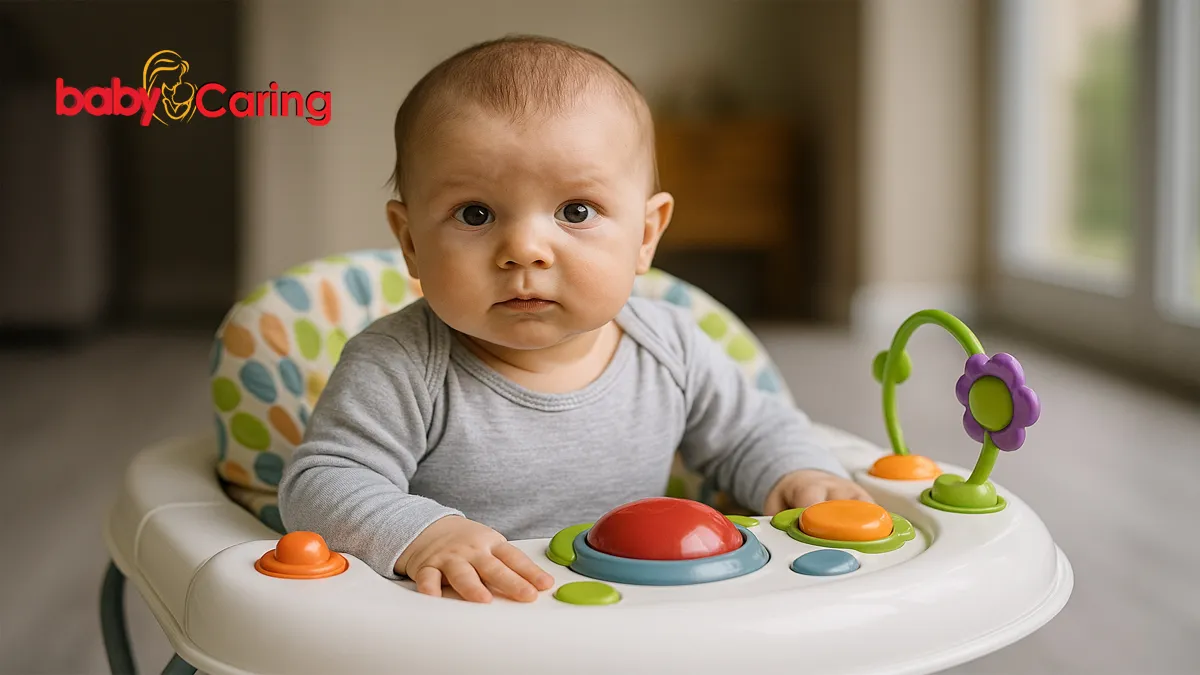
Many parents ask, are walkers bad for babies, especially when they promise quick mobility and fun. 😕 You may see them in stores, at friends’ houses, or gifted at baby showers and wonder if they are helpful or harmful.
On the surface, baby walkers look convenient. They seem to keep babies busy while letting them “practice” walking. Yet pediatricians and safety experts have raised serious concerns about these devices. Some countries have even banned them.
If you are feeling torn between convenience and safety, you are not alone. This article breaks down what research says, why are walkers bad for babies according to many experts, and what you can safely use instead.
Let’s go through 10 powerful facts every parent should know so you can make a confident, informed choice. 💛
1. Are Walkers Bad for Babies? The Short Answer
Most pediatric organizations agree that traditional wheeled baby walkers are not recommended. In fact, many experts consider them unsafe and unhelpful for development.
The American Academy of Pediatrics has publicly called for a ban on infant walkers because of the number of injuries they cause each year. You can read more in the article “Infant Walkers: A Dangerous Choice” on HealthyChildren.org.
Why are walkers such a concern?
Key reasons include:
- High injury risk, especially head injuries
- Delayed motor development in some babies
- Poor positioning for hips and legs
- Ability to reach dangerous areas quickly
So when you ask, are walkers bad for babies, the scientific and medical consensus leans strongly toward “yes, they are risky and not necessary.”
2. Baby Walkers Cause Thousands of Injuries Every Year
One of the biggest problems with baby walkers is safety. They can move very fast. Even a quick distraction can lead to a serious accident.
Common injuries linked to walkers include:
- Falls down stairs
- Tipping over on uneven surfaces
- Reaching hot stoves, heaters, or kettles
- Grabbing sharp or breakable objects
- Head injuries and fractures
Research from North America has documented tens of thousands of emergency visits over the years due to walker-related injuries. Many of these injuries are preventable, simply by not using walkers at all.
A realistic example:
A caregiver turns to answer a phone for a few seconds. The baby in a walker rolls toward the stairs faster than expected. Before anyone can reach them, they fall down several steps. This scenario has been reported many times in hospitals.
Organizations like the Mayo Clinic also warn parents that even “improved” safety features do not remove the basic risk. Babies can still move quickly and reach danger zones.
3. Are Walkers Bad for Babies Development?
Many parents buy walkers hoping to help their child learn to walk faster. It feels logical. If the baby is upright and moving, they must be practicing walking.
However, research suggests the opposite may happen.
Several studies have found that babies who use walkers may:
- Reach certain motor milestones later
- Spend less time practicing natural skills
- Develop unusual movement patterns
When babies are in walkers, they:
- Do not see their legs and feet clearly
- Do not shift weight the same way as in normal standing
- Often push off their toes rather than using the whole foot
This changes how they learn to balance and coordinate their body. Instead of crawling, pulling up, and cruising along furniture, they “skip ahead” in a way that does not truly train their muscles and brain.
So if you wonder, are walkers bad for babies development, many therapists and pediatricians say they can interfere with the natural learning process. Babies learn best on the floor, at their own pace, with safe, open spaces.
4. Are Walkers Bad for Babies Hips?
Hip health is a very common concern, especially for parents who hear mixed advice. The question “are walkers bad for babies hips” comes up at many checkups.
When babies are placed in walkers, their hips and legs are often positioned in ways that are not ideal:
- Legs may be spread too wide
- Hips may turn inward or outward unnaturally
- Toes often point down, encouraging tiptoe walking
Over time, this position may place abnormal stress on the hip joints and leg muscles. For babies who already have mild hip issues, this can be especially concerning.
While not every baby in a walker will develop hip problems, experts try to reduce any avoidable risk. Because baby walkers offer no real developmental benefit, most professionals advise skipping them.
Are walkers bad for babies hips?
This specific question is important. Some evidence suggests that extended time in walkers may contribute to:
- Poor alignment of the lower limbs
- Habitual toe walking
- Increased tightness in certain leg muscles
For healthy hip development, babies need:
- Time on their tummy
- Time rolling, sitting, crawling
- Supported standing on flat feet with free hip movement
Walkers do not provide this type of natural, active movement.
5. Walkers Give a False Sense of Safety and Independence
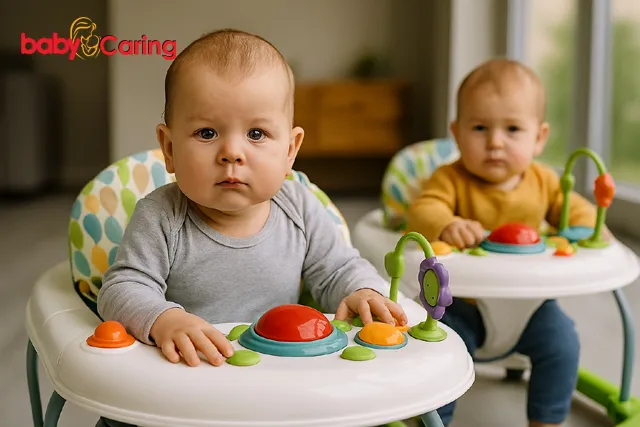
Baby walkers can make it seem like your child is more capable than they really are. This is one reason why accidents happen.
Inside the walker, babies:
- Can move much faster than they can on their own
- Reach higher surfaces, like counters or tables
- May appear stable, but cannot protect themselves
Parents often feel, “They are contained, so they must be safe.” Yet the device actually increases the baby’s reach and speed. That can create a dangerous mismatch between what the baby seems able to do and what they can truly handle.
Example:
A nine-month-old in a walker reaches a tablecloth and pulls it. A hot drink or heavy object falls. Without the walker, that same baby might not reach the table at all.
This false sense of safety is one of the strongest arguments when experts explain why are walkers bad for babies.
6. Walkers Do Not Teach True Walking Skills
It is easy to think that more time “walking” means learning faster. But walking is a complex skill. Babies need:
- Strong core muscles
- Stable hip and leg strength
- Balance and coordination
- Practice shifting weight from one leg to another
In a walker, babies do not practice these skills in a natural way. Instead, they:
- Use their toes to push off
- Lean forward on the support of the seat
- Rely on the device for balance
This means the walker is doing the hard work. Not the baby.
When they finally walk on their own, they must learn a new way of moving. Their experience in the walker does not smoothly translate into independent walking.
If you feel pressure to hurry development, remember this. Babies do not need to walk early to be healthy or smart. Each child has a normal range. Pushing them ahead with equipment can be unhelpful, and sometimes harmful.

7. Walkers Can Limit Important Floor Time
Floor time is one of the most valuable “activities” for babies. It looks simple, but it is very powerful for development.
On the floor, babies:
- Strengthen their neck, back, and core muscles
- Learn to roll, reach, pivot, and crawl
- Explore their body in space
- Build coordination and problem-solving skills
When a baby spends long periods in a walker, they lose that time. They may become less interested in crawling or practicing other natural movements.
Overuse of any “container” can cause this issue. These include:
- Walkers
- Jumpers
- Swings
- Bouncers
Pediatric physical therapists often recommend the “20-minute rule.” Try to limit time in devices to short periods, and balance it with generous floor play. Walkers, however, are usually not advised at all because of the injury risk.
8. Not All Baby Gear Is Equal: Walkers vs Safer Alternatives
Parents often confuse different types of baby gear. Some equipment is safer and more supportive than walkers. Understanding the difference can help you choose wisely.
Here is a comparison:
| Baby Gear | Main Features | Safety and Development Notes |
|---|---|---|
| Traditional wheeled baby walker | Seat on wheels, baby’s feet touch floor, baby can move | High injury risk, not recommended, may affect development |
| Stationary activity center / exersaucer | Baby stands or sits in center, cannot move across floor | Safer than walkers, still limit time; does not teach walking |
| Push toy / push walker | Baby holds handle and pushes toy while walking | Better for practicing walking; supervise closely to avoid falls |
| Playpen or gated play area | Safe, enclosed space on the floor | Great for floor play, crawling, pulling up, supervised exploration |
| Simple floor mat and toys | Open floor space with age-appropriate toys | Best for natural development and movement freedom |
Experts from the Centers for Disease Control and Prevention emphasize the importance of natural movement and milestone tracking. Open floor time supports this best.
9. Are Walkers Bad for Babies Everywhere? What Experts Worldwide Say
Concerns about walkers are not limited to one country. Health organizations worldwide have raised alarms.
Examples include:
- Canada has strict safety standards, and experts discourage use.
- Some countries have banned sales of traditional baby walkers.
- Many pediatric societies strongly recommend avoiding them.
The general pattern is clear. As more injury and development data appears, more experts warn against walkers.
The World Health Organization focuses more on feeding and general development. Even so, global guidance encourages responsive parenting, safe environments, and free movement. Walkers conflict with these goals by adding unnecessary risk.
When so many professionals from different regions share the same message, it becomes harder to argue that walkers are just “harmless fun.”
10. What To Do Instead of Using Baby Walkers
If you decide to avoid walkers, you still need ways to:
- Entertain your baby
- Encourage movement
- Keep them safe while you get things done
Here are practical, safer options. 🌟
- Supervised floor play
- Use a soft mat or rug.
- Add a few interesting toys at different distances.
- Let baby roll, scoot, and crawl toward them.
- A safe gated play area
- Create a fenced zone in your living room.
- Remove choking hazards and sharp objects.
- Place sturdy furniture for pulling up, if age-appropriate.
- Short periods in a stationary activity center
- Use for brief play breaks, not long stretches.
- Make sure baby’s feet touch flat, not just toes.
- Avoid using it as a “parking spot” for long chores.
- Supported standing and cruising
- Hold your baby under the arms or at the trunk.
- Let them bear weight on their feet on a firm surface.
- Encourage cruising along a sofa or low table.
- Push toys for older babies
- Once your baby can stand and take steps with support, consider a stable push toy.
- Supervise closely, especially on hard floors.
- Avoid toys that roll too fast or tip easily.
If you have questions tailored to your child, ask your pediatrician or a pediatric physical therapist. They can give guidance based on your baby’s unique needs.
Frequently Asked Questions
1. Are walkers bad for babies, even if I watch them closely?
Supervision helps, but accidents with walkers happen very quickly. Even a two-second distraction can be enough for a fall or burn. Because the risk is high and the benefits are low, most experts advise not using them at all.
2. Are walkers bad for babies hips if I use them only a little?
Short use is less risky than long periods. Still, the positioning in walkers is not ideal for hip health. Since there are safer ways to support standing and movement, many professionals recommend skipping walkers completely, rather than trying to limit them.
3. Are walkers bad for babies development, or is that overstated?
Not every baby who uses a walker will have delays. However, research suggests a higher chance of delayed milestones and altered movement patterns. Because babies learn best through natural floor play and supported standing, walkers are not needed and may interfere.
4. When can my baby safely learn to walk without a walker?
Most babies walk independently between 9 and 18 months. That is a wide normal range. You can support walking by:
- Giving lots of floor time
- Encouraging pulling to stand
- Letting them cruise along furniture
- Holding their hands for practice
No special device is required. Their body and brain know what to do with patient support.
5. What if I already own a walker or received one as a gift?
You can choose not to use it and still be a loving, grateful parent. 💕 You might:
- Donate it to a prop department or display use, not for real babies
- Exchange it for a safer item, like a play mat or gate
- Explain to loved ones that your pediatrician advised against walkers
Your decision protects your baby’s safety and development. That matters more than using every gift.
6. Are sit-in activity centers safer than walkers?
Stationary activity centers are generally safer because they do not roll. Still, they should be used in moderation. Too much time in any container can limit movement and exploration. Balance short sessions in activity centers with plenty of free floor play.
Conclusion
So, are walkers bad for babies? Based on current research and expert opinion, traditional wheeled baby walkers are risky and unnecessary. They increase the chance of serious injury, may interfere with healthy development, and do not truly teach walking skills.
Parents also worry, are walkers bad for babies hips, and are walkers bad for babies development in the long run. The concerns are real. Walkers place babies in unnatural positions and often replace valuable floor time and natural exploration.
The encouraging part is this. Your baby does not need a walker to thrive. 🎈 With simple tools like a safe floor area, a few toys, and your responsive presence, your child can build strong muscles, balance, and confidence at their own pace.
If you are uncertain about your baby’s milestones or hip health, talk with your pediatrician. You can also review guidance from trusted sources like HealthyChildren.org and the Mayo Clinic to deepen your understanding.
Your choices today help shape your baby’s safety and movement patterns for years to come. By skipping walkers and choosing safer alternatives, you are already supporting healthier, happier development. 🌼
About the Author